2008 to 2012
Shanghai
I started my engineering studies in Shanghai, graduating near the top of my class. But textbooks weren't enough. I wanted to see the world beyond China, and Germany seemed like the perfect place for an aspiring engineer.
A little about me
By day, I am a battery systems engineer with a background spanning thermal modelling, Python, and AI. Outside the day job, I follow fresh ideas wherever they lead: into code, prose, and visual forms.
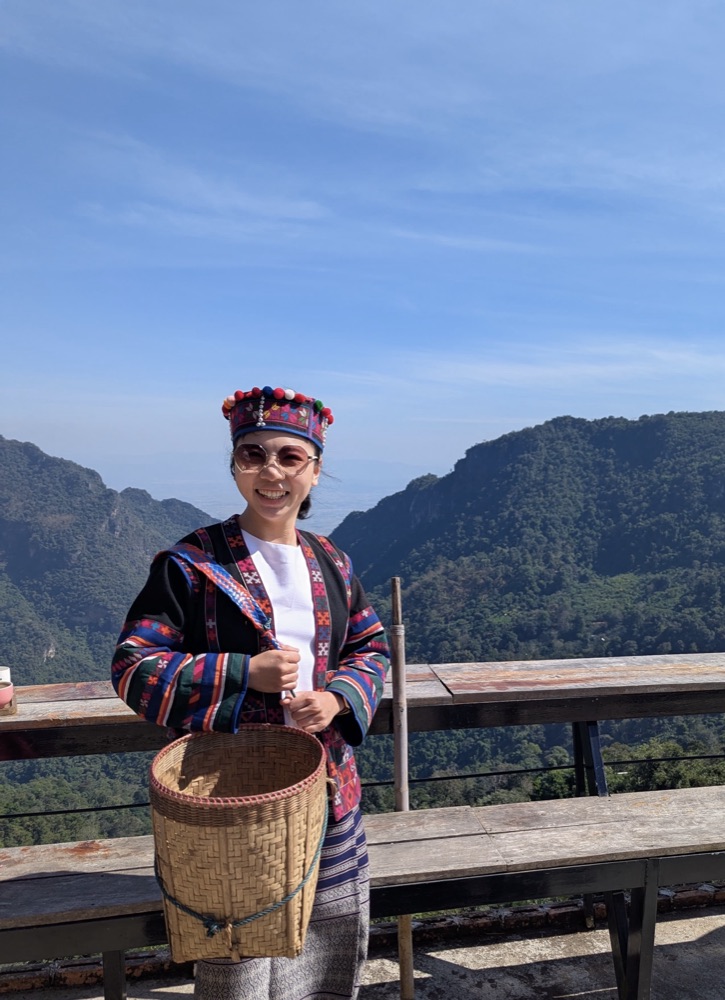
I’m drawn to the place where rigorous engineering meets curiosity and care.
By day, I work on battery systems for high-performance vehicles, where Matlab, Simulink, Python, physical modelling, and messy real-world data are part of the daily rhythm. My experience has moved from cell development at McLaren to eVTOL thermal modelling, grid-scale lifetime prediction, and motorsport analytics for Formula E and LMDh.
Around the edges, I keep learning. I build AI-assisted workflows, make small products I wish existed, and write about knowledge, work, technology, and meaning. This website is where those different parts of me are allowed to sit together.
I don’t think it’s ever too late to begin a new direction. The best time to plant a tree may have been thirty years ago; the next best time is now.
The path so far
From studying material science to building state of the art algorithms, my career hasn't been a straight line. It has been a continuous pursuit of impact and application.
2008 to 2012
I started my engineering studies in Shanghai, graduating near the top of my class. But textbooks weren't enough. I wanted to see the world beyond China, and Germany seemed like the perfect place for an aspiring engineer.
2012 to 2015
I landed in Germany to study Advanced Material Science at the Technical University of Munich. During an internship at BMW, I characterised battery cells, and outside the lab, I saw electric vehicles already running on Munich's streets.
That was the moment. I realised batteries were the future, and I wanted to be part of it.
2015 to 2019
I knew I wasn't a handy person. Delicate laboratory work wasn't for me. What I loved was the puzzle of application: turning messy data into clear answers.
I secured a PhD at Vrije Universiteit Brussel, sponsored by ENGIE Laborelec, and dived into data driven battery health diagnostics. I learned Python and MATLAB. I built SOH estimation tools with less than 5% error and SOC models with less than 3% error. I published three first author papers. I graduated with highest honour.
It completely changed my world. I absolutely fell in love with it.
2018 to 2019
During the final year of my PhD, I took a concurrent postdoc at Lancaster University. Here I expanded my knowledge from state of health algorithms to lifetime prediction, which is crucial for real applications. For batteries in electric vehicles, you need to estimate how long a cell can survive and use that to negotiate the cell warranty.
I set up a cell testing facility from scratch and managed data from over 50 channels, building the kind of data infrastructure I would later scale up in industry.
2019 to 2021
I moved south to join McLaren Automotive as a Cell Project Engineer. I created the company's first battery lifetime prediction model from scratch, designed for cells operating under extreme conditions and validated on real driving cycles.
I led cell development projects for the Speedtail hypercar, managed suppliers, and built thermal electrical models from 0D MATLAB to 1D GT-SUITE.
2021 to 2023
I joined Vertical Aerospace in Bristol, where the challenge scaled up to eVTOL aircraft. My focus stayed on lifetime prediction and cell thermal electrical modelling, achieving surface temperature errors of less than 2 °C.
Here I was exposed to a large amount of cell data. Besides the modelling work, I helped Vertical set up its first ever cloud cell data pipeline. This massively reduced the time engineers spent on data processing, improved data quality across the board, and cut querying overheads by 70%.
2023 to 2024
At Envision Energy's Centre of Excellence, I built a cell lifetime prediction model for large format grid scale Li ion batteries in just one month, with limited test data, achieving less than 2% prediction error.
I integrated cell to cell variance and inhomogeneous temperature distribution into a probabilistic framework, and began exploring Physics Informed Neural Networks to blend physics models with machine learning.
2024 to Present
Now I am a lead engineer in a battery company focused on motorsport programs. My work spans the entire first life of the battery, covering cell selection, pack design, manufacturing quality, and fleet based state of health analysis.
While I enjoy full stack modelling from cell to system, what excites me most is bringing AI into the engineering field. I am establishing advanced AI workflows and agents to help engineers make smarter, faster decisions.
From a chemistry lab in Shanghai to the pit wall of a Formula E race, the thread has always been the same: turning complex electrochemistry into clear engineering actions.
Keep in touch
Battery systems, useful AI, thoughtful tools, or something I haven’t imagined yet.